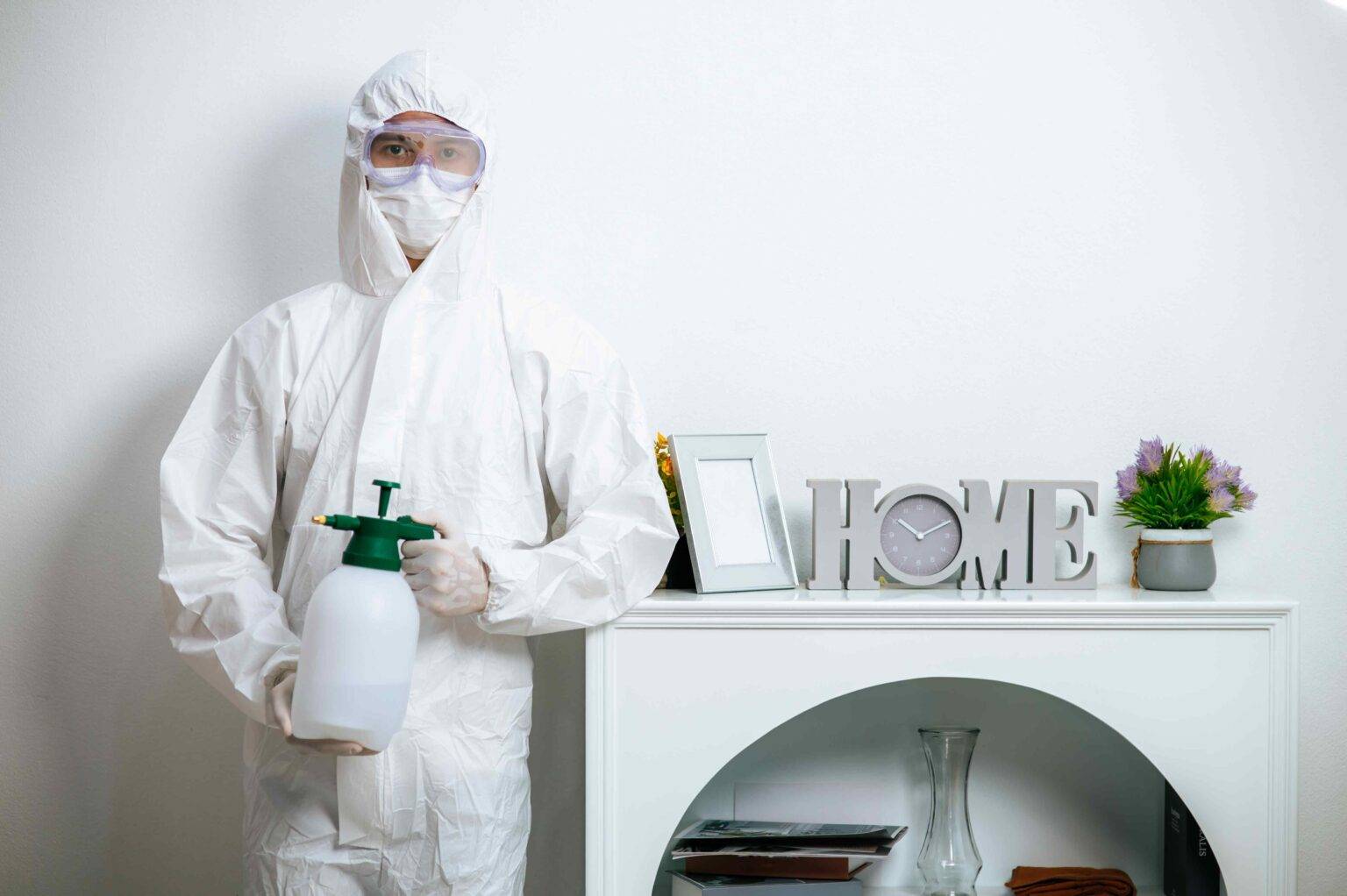
What is meth decontamination?
Meth decontamination removes methamphetamine residue from walls, ceilings, floors, fixtures and ventilation until independent testing confirms the property is below 0.5 µg per 100 cm², the residential level in the Australian Voluntary Guidelines for the Remediation of Former Clandestine Drug Laboratory Sites.
Residue builds up wherever meth has been smoked or made. It settles on hard surfaces and soaks into porous materials like carpet, underlay, curtains, blinds and unsealed plasterboard. A standard end of lease clean or a steam clean does not reliably bring readings down, and some cleaning methods spread residue further through the home.
Our job is to bring the property back to a safe, habitable standard while keeping as much of it as possible. Just because a house has high readings does not automatically mean walls need to come out. We scope the work from the actual results in your report, not from guesswork.
Specialist meth decontamination services
Different properties and assets need different approaches. These pages explain how we handle each one:
Our meth decontamination process
Every job follows the same order so you always know where things are at. The independent tester is engaged by you or by us on your behalf, and is never part of our company.
Review the test report
We read the detailed laboratory report room by room. If you only have a screening result, we point you to an independent NAMC verified tester for a detailed assessment first.
Written scope and fixed quote
You receive a written decontamination plan listing what will be cleaned, what will be removed and why, plus a fixed quote.
Removal of contaminated soft furnishings
Carpets, underlay and blinds are usually removed. Other items may or may not need to go, depending on the readings in each room.
HEPA vacuum and 4 step chemical washdown
All surfaces are HEPA vacuumed, then cleaned with our 4 step chemical washdown. Contaminated waste is bagged and removed for proper disposal.
Independent clearance testing
An independent tester retests the property. If any area is still above the guideline, it is re-treated and retested before sign-off.
Reporting and reinstatement
You receive documentation for your records, insurer, buyer or tenant. We can also manage new carpet, blinds and repairs.
Got a positive meth test?Send us the report and we will scope the clean against the actual readings.
What can stay and what needs to go?
In most meth house decontamination jobs, soft furnishings such as carpets, underlay, curtains and blinds need to be replaced. Hard fixtures are usually cleaned in place. In line with industry guidance, most electrical fixtures, air conditioning units, fans and ovens can be kept. Extra steps are only needed where readings are extremely high.
| Item | Usual outcome | Why |
|---|---|---|
| Carpet, underlay, rugs | Removed and replaced | Porous fibres hold residue that cleaning cannot reach |
| Curtains and blinds | Usually removed | Fabric and slats collect residue from smoke |
| Walls and ceilings | Cleaned, sealed if needed | Painted surfaces can usually be cleaned to guideline |
| Air conditioning and fans | Cleaned in place | Removed only if readings stay high after cleaning |
| Ovens and appliances | Cleaned in place | Replaced only in extreme cases |
| Furniture and belongings | Assessed case by case | Hard items can often be cleaned, soft items rarely |
Please don't panic or start pulling the house apart. Call us first. Unnecessary demolition is one of the most common and expensive mistakes we see.
Who we help
- Landlords and property managers who need a rental cleaned and cleared so it can be leased again.
- Buyers and sellers working to a settlement date who need documentation for the contract.
- Homeowners and families who have discovered residue after moving in.
- Commercial owners with offices, warehouses, motels and vehicles that have tested positive.
If cleaning the property doesn't make sense financially, we can also make a cash offer to buy it as is.
Meth decontamination near you
Our technicians work in every state and territory. These pages cover local service details:
By state:
See all meth decontamination locations or call 1300 707 028.
Why meth decontamination is important
Meth residue doesn't wear off. It stays on walls, floors, furniture and curtains long after the people who used or made the drug have gone, and it keeps exposing whoever lives in or uses the property next. Professional decontamination is the only reliable way to remove it and prove it's gone.
Methamphetamine use in Australia is at record levels. The Australian Criminal Intelligence Commission's National Wastewater Drug Monitoring Program estimated that 15.7 tonnes of methylamphetamine were consumed in the year to August 2025, the highest since the program began in 2016. Regional areas recorded higher per capita meth use than capital cities. With that much meth being used, it's no surprise that more homes, rentals and vehicles are testing positive.
According to WA Health, meth contamination can remain on surfaces long after occupants move out, and homes where meth was manufactured carry a higher risk to health than homes where it was only smoked. Queensland's Residential Tenancies Authority notes that drug residue can be absorbed into a building's walls, ceilings, fixtures and furnishings.
Who is most at risk?
- Babies and toddlers, who crawl on floors, touch surfaces and put their hands in their mouths.
- Pregnant women and people with existing health conditions.
- Tenants and new owners who move in without knowing the property's history.
- Cleaners, tradespeople and agents who work in contaminated properties.
People living in contaminated homes have reported headaches, irritated skin and eyes, breathing problems, trouble sleeping and behavioural changes in children. Research by Dr Jackie Wright of Flinders University documented these kinds of effects in people who unknowingly lived in contaminated homes.
What can happen if a property isn't decontaminated?
Ignoring a positive meth test, or cleaning it the wrong way, rarely makes the problem go away. It usually makes it more expensive.
| Risk | What it can mean for you |
|---|---|
| Ongoing health exposure | Occupants, especially children, keep absorbing residue through skin contact and ingestion. |
| Legal and duty of care | Landlords must provide premises fit to live in. Tenants may be able to seek remedies through their state tribunal, and businesses owe a duty of care to staff and guests. |
| Insurance complications | Many policies expect you to act promptly to limit further loss. Delays or undocumented DIY cleaning can make claims harder. |
| Lost income | A contaminated rental or short-stay property can't be safely leased, and every week empty is lost rent. |
| Lower sale price or failed settlement | Buyers increasingly test before settlement. A positive result can stall a sale, reduce the price or see the buyer walk away. |
| Council action | For former drug labs, councils can use public health powers to require remediation before the property is occupied again. |
| Spreading the contamination | Moving contaminated furniture, vacuuming with household machines or steam cleaning can spread residue to clean areas and new homes. |
Most of the expensive cases we see started as smaller problems that were left too long or cleaned incorrectly. Getting advice early almost always costs less.
Who is responsible for meth decontamination?
- Property owners are generally responsible for making their property safe, whether it's owner-occupied, rented or used for short stays.
- Landlords must provide a rental that is safe and fit to live in. Rules and remedies vary by state, so check with your tenancy authority.
- Tenants who cause contamination may be liable for the cost, and many landlord insurance policies include cover for meth damage caused by tenants.
- Sellers and agents must not mislead buyers. A known positive meth test is likely to be a material fact, so get legal advice before selling.
- Businesses such as hotels, motels and employers have work health and safety duties to staff and guests.
This is general information, not legal advice. If you're unsure of your obligations, speak to your lawyer, tenancy authority or insurer.
How to choose a meth decontamination company
Meth testing and decontamination aren't specifically regulated in Australia, and there's no mandatory national training standard. That makes it important to check how a company works before you hire it:
- Independent testing: the company cleaning your property shouldn't be the one that tests and clears it.
- A written scope: you should see exactly what will be cleaned, removed and replaced, and why.
- Recognised guidelines: work should be done to the Australian Voluntary Guidelines for the Remediation of Former Clandestine Drug Laboratory Sites and enHealth guidance.
- Clear treatment of re-cleans: ask what happens if an area fails clearance.
- Proper waste disposal: contaminated materials must go to appropriate facilities.
- Real reviews: look for genuine Google reviews from homeowners, landlords and agents.
Decon Solutions Australia ticks every one of these boxes. Read what our clients say.
Preparing for decontamination and keeping it clear
Before we arrive
- Don't start removing carpets, walls or furniture yourself.
- Keep power and water connected so we can work efficiently.
- Set aside belongings you want assessed, and tell us about anything sentimental or valuable.
- Arrange for occupants and pets to stay elsewhere during the works.
After clearance
- Keep the clearance report with your property records, lease or contract of sale.
- Test again at the end of each tenancy, or between short-stay bookings if you're a host.
- Include routine inspections and testing clauses in your lease, where your state allows.
- Ask your insurer whether your cover includes meth contamination.
Frequently asked questions
What is the safe level of meth residue in Australia?
The Australian Voluntary Guidelines for the Remediation of Former Clandestine Drug Laboratory Sites set a residential remediation level of 0.5 µg of methamphetamine per 100 cm². Your property is considered remediated when independent clearance testing confirms every sampled area is below that level.
How long does meth decontamination take?
A standard residential meth clean generally takes about two days on site. Larger homes, very high readings, former meth labs and properties needing rebuild work take longer. Your written quote includes a timeframe.
How much does meth decontamination cost?
Most meth decontamination jobs in Australia cost between $4,500 and $35,000, depending on the readings, the size of the property and how much needs to be removed and replaced. See our meth decontamination cost guide for the details.
Do you test the property yourselves?
No. We never test the properties we clean. Testing and clearance testing are carried out by independent NAMC verified and NATA accredited testers, so the result is objective and stands up with buyers, tenants and insurers.
Can I clean meth residue myself?
We don't recommend it. The chemicals needed to bring readings under the guideline are hazardous if handled incorrectly, and DIY cleaning often fails clearance testing, which means paying twice.
Will my insurance cover meth decontamination?
It depends on your policy. Some landlord insurance policies cover meth contamination caused by tenants. We provide the documentation your insurer will ask for, but please check your cover with your insurer directly.
Is meth contamination dangerous if it's only from smoking?
Smoking generally leaves lower residue levels than manufacturing, but repeated smoking can still push readings well above the 0.5 µg per 100 cm² guideline, particularly in bedrooms, living areas and air conditioning. Testing tells you the real levels.
Can I live in the property while it's being decontaminated?
No. Occupants and pets should stay elsewhere during decontamination and until clearance testing confirms the property is safe.
Does meth contamination affect property value?
A known, unremediated contamination can reduce what buyers will pay or delay settlement. A property that has been decontaminated and independently cleared, with documentation, removes most of that concern.