
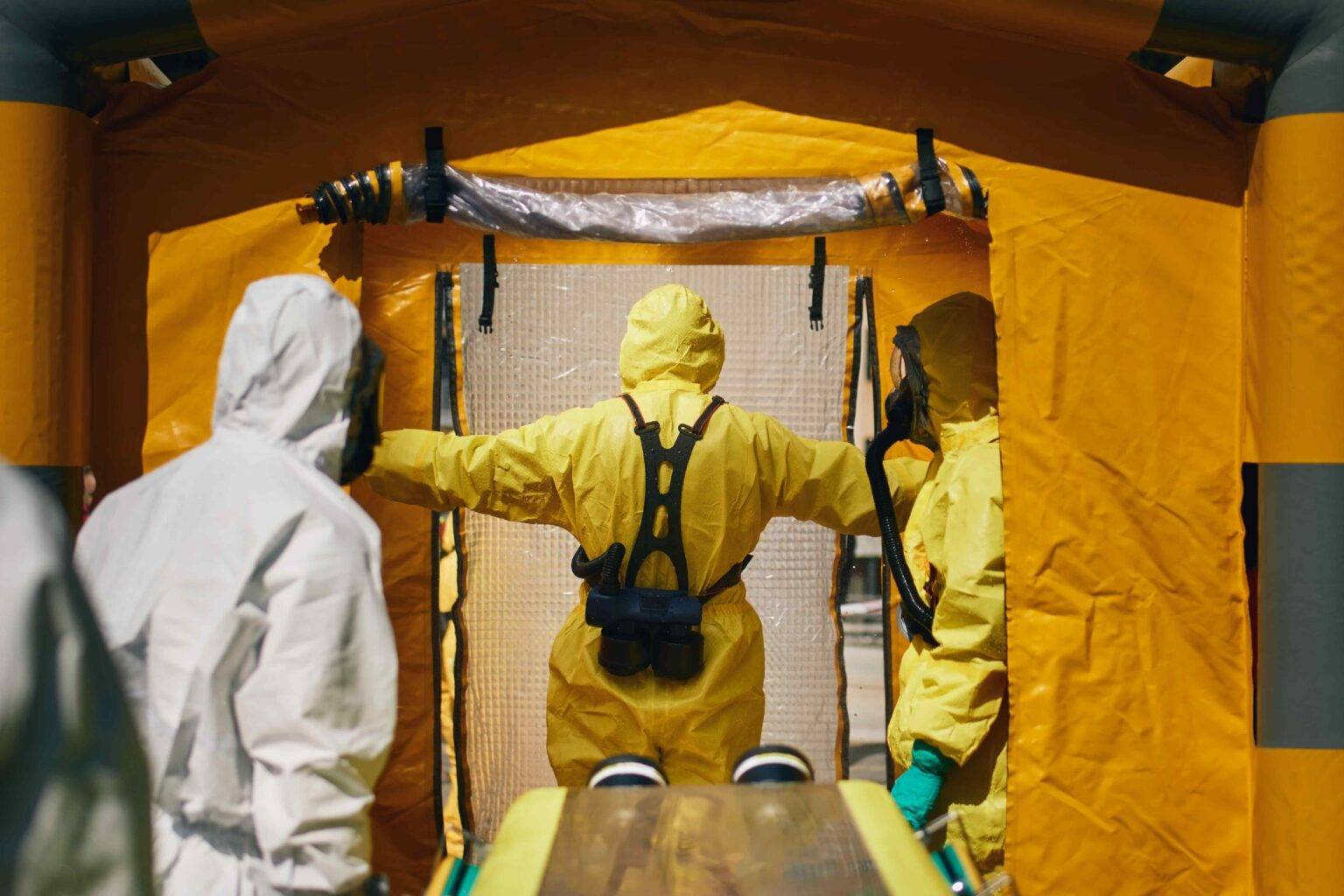
How meth lab cleaning differs from a standard meth clean
A meth lab site has the same residue as a home where meth was smoked, plus chemicals and by-products from manufacturing. Those chemicals have to be identified, collected, transported and disposed of safely, and readings are usually much higher.
Chemicals found at former labs can damage the respiratory tract, eyes and skin. They include:
- Anhydrous ammonia
- Drain cleaners and strong acids, such as hydrochloric or sulfuric acid
- Paint thinners and solvents
- Camping fuel and starter fluid
- Metallic lithium
If you find what looks like an active or abandoned lab, leave immediately and call police on 000. Do not touch containers or equipment.
Our meth lab remediation process
Police release and site information
We work from the release of the site and any information available about what was found there.
Detailed testing and scope
An independent tester assesses residue and contamination. We prepare a written remediation plan.
Chemical and waste removal
Hazardous materials and heavily contaminated items are removed and disposed of at licensed facilities.
Decontamination
HEPA vacuuming and our chemical washdown process, with removal of porous materials and sealing where needed.
Clearance and reporting
Independent clearance testing and documentation for owners, insurers and local council.
Meth lab cleaning across Australia
Police detect hundreds of clandestine drug labs in Australia every year, and a large share are in residential properties. We clean former lab sites in every state and territory, including Brisbane, the Gold Coast, Sydney, Melbourne, Adelaide and Perth.
See meth decontamination locations for local service pages.
Why meth decontamination is important
Meth residue doesn't wear off. It stays on walls, floors, furniture and curtains long after the people who used or made the drug have gone, and it keeps exposing whoever lives in or uses the property next. Professional decontamination is the only reliable way to remove it and prove it's gone.
Methamphetamine use in Australia is at record levels. The Australian Criminal Intelligence Commission's National Wastewater Drug Monitoring Program estimated that 15.7 tonnes of methylamphetamine were consumed in the year to August 2025, the highest since the program began in 2016. Regional areas recorded higher per capita meth use than capital cities. With that much meth being used, it's no surprise that more homes, rentals and vehicles are testing positive.
According to WA Health, meth contamination can remain on surfaces long after occupants move out, and homes where meth was manufactured carry a higher risk to health than homes where it was only smoked. Queensland's Residential Tenancies Authority notes that drug residue can be absorbed into a building's walls, ceilings, fixtures and furnishings.
Who is most at risk?
- Babies and toddlers, who crawl on floors, touch surfaces and put their hands in their mouths.
- Pregnant women and people with existing health conditions.
- Tenants and new owners who move in without knowing the property's history.
- Cleaners, tradespeople and agents who work in contaminated properties.
People living in contaminated homes have reported headaches, irritated skin and eyes, breathing problems, trouble sleeping and behavioural changes in children. Research by Dr Jackie Wright of Flinders University documented these kinds of effects in people who unknowingly lived in contaminated homes.
What can happen if a property isn't decontaminated?
Ignoring a positive meth test, or cleaning it the wrong way, rarely makes the problem go away. It usually makes it more expensive.
| Risk | What it can mean for you |
|---|---|
| Ongoing health exposure | Occupants, especially children, keep absorbing residue through skin contact and ingestion. |
| Legal and duty of care | Landlords must provide premises fit to live in. Tenants may be able to seek remedies through their state tribunal, and businesses owe a duty of care to staff and guests. |
| Insurance complications | Many policies expect you to act promptly to limit further loss. Delays or undocumented DIY cleaning can make claims harder. |
| Lost income | A contaminated rental or short-stay property can't be safely leased, and every week empty is lost rent. |
| Lower sale price or failed settlement | Buyers increasingly test before settlement. A positive result can stall a sale, reduce the price or see the buyer walk away. |
| Council action | For former drug labs, councils can use public health powers to require remediation before the property is occupied again. |
| Spreading the contamination | Moving contaminated furniture, vacuuming with household machines or steam cleaning can spread residue to clean areas and new homes. |
Most of the expensive cases we see started as smaller problems that were left too long or cleaned incorrectly. Getting advice early almost always costs less.
Who is responsible for meth decontamination?
- Property owners are generally responsible for making their property safe, whether it's owner-occupied, rented or used for short stays.
- Landlords must provide a rental that is safe and fit to live in. Rules and remedies vary by state, so check with your tenancy authority.
- Tenants who cause contamination may be liable for the cost, and many landlord insurance policies include cover for meth damage caused by tenants.
- Sellers and agents must not mislead buyers. A known positive meth test is likely to be a material fact, so get legal advice before selling.
- Businesses such as hotels, motels and employers have work health and safety duties to staff and guests.
This is general information, not legal advice. If you're unsure of your obligations, speak to your lawyer, tenancy authority or insurer.
Frequently asked questions
How do I know if my property was a meth lab?
Police usually notify the owner when a lab is found. Other signs include chemical odours, stained or corroded fixtures, and unusual equipment left behind. A detailed meth residue test will show whether levels point to manufacture.
Does council need to be involved?
Some councils issue notices or have their own requirements for former drug lab sites. We provide the documentation councils usually ask for and can work to the deadline in a notice.
Is meth lab cleaning more expensive?
Usually, yes. Lab sites need more removal, more cleaning passes and chemical waste disposal. See our cost guide.
Can I live in the property while it's being decontaminated?
No. Occupants and pets should stay elsewhere during decontamination and until clearance testing confirms the property is safe.